Social Cohesion
How does our ability to understand others affect society more widely?
WHAT WE KNOW
Our research suggests that people are much better at understanding people who are similar to themselves, be it people with similar life experiences or similar political views or beliefs, for instance. This is likely to be because we spend more time with them. For instance, our friends, family, or work colleagues or people we know from other social groups tend to share some things in common with us and, over time, we build up a good idea of them and what sort of mind they have.
THE PROBLEM
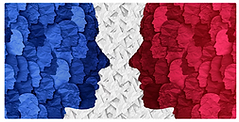
But what does this mean for people who are different from ourselves? For instance, people with different political views to us, people who speak a different language or have a different type of mind (e.g. autistic vs not autistic). We typically spend less time with people who differ from ourselves and our understanding is often based on limited interactions or second-hand information from media or from social networks. We now know that this affects how well we understand them.
Watch this 3 minute video explaining what we found:
WHAT THIS MEANS
Specifically, when people are thinking about someone that differs from themselves – someone that politically disagrees with them, for example – they are more likely to be wrong than right when judging what sort of views that person has. However, people don’t know this, and are very confident that they know what someone is thinking, what their views are, or what their motivation was for acting a certain way, regardless of whether that person is similar to themselves or very different.
This lack of awareness about our reduced ability to understand people who differ from ourselves is problematic. Our assumptions are shaped by our past experiences, and if we’ve only been exposed to a narrow set of perspectives, we might misinterpret the behaviour of others who think, act, or live differently. At a societal level, this can fuel tension and hostility between different groups of people. For instance, if entire groups of people are misjudged, we’re less likely to engage with them, value their lives as much or help them out when they’re in need.
WHAT CAN HELP
Step 1: When it comes to thinking about people who are different from yourself, don’t be quick to judge them. Your initial assumption about them is probably wrong.
Step 2: Try to engage with people who are different from yourself. People have a tendency to avoid talking to people they think they disagree with, but this means our incorrect assumptions don’t ever get corrected. Try to hear and learn about their real stories, their beliefs, desires, emotions, and reasons for thinking the way they do.
Step 3: We often read about people from different groups to our own in the media, but the media doesn’t (and can’t) give the full story on each individual that makes up that group. Remember that not everyone in the group is the same. Try to treat people as individuals, with their own thoughts, intentions, and motivations, that may be very different to a stereotype the media or social networks convey, especially if it is negative.
READ MORE
You can read more about how being less able to understand people who are different from ourselves affects us at the following links.